Meme coin trading, what a live pro-vs-amateur challenge reveals about risk
You can order the same kind of articles for your own video to boost it on YouTube and Google. Just message the Telegram bot @sat_sit_bot. The bot writes and publishes the articles itself (with your YouTube video embedded) on popular topical websites (no ads). Free trial — 50 articles.
· based on the channel insentos
Key takeaways
- Meme coins are highly volatile tokens driven by community attention, not cash flow or earnings; most lose value quickly.
- The insentos video pits the host against a guest described as a professional meme coin trader in a live, unscripted session.
- Trading tools referenced in the video include Axiom (axiom.trade) and the FOMO community platform.
- Viewers repeatedly ask for smaller-bankroll challenges and more beginner-friendly breakdowns of the strategy.
- A recurring viewer observation: such live sessions often end in losses, which underlines how close meme coin scalping is to gambling.
A meme coin is a crypto token whose price is driven almost entirely by community attention, memes and short-term speculation rather than revenue or fundamentals. Trading them profitably means treating them as a high-risk, fast-moving market where position sizing, speed of execution and exit discipline matter more than conviction. The insentos video I Challenged A Pro Memecoin Trader (Who Won?) puts that idea to the test in a live session, and the practical lessons are useful whether or not you watch it — you can register and follow the same community tools via the FOMO referral link.
What the live meme coin challenge actually tests
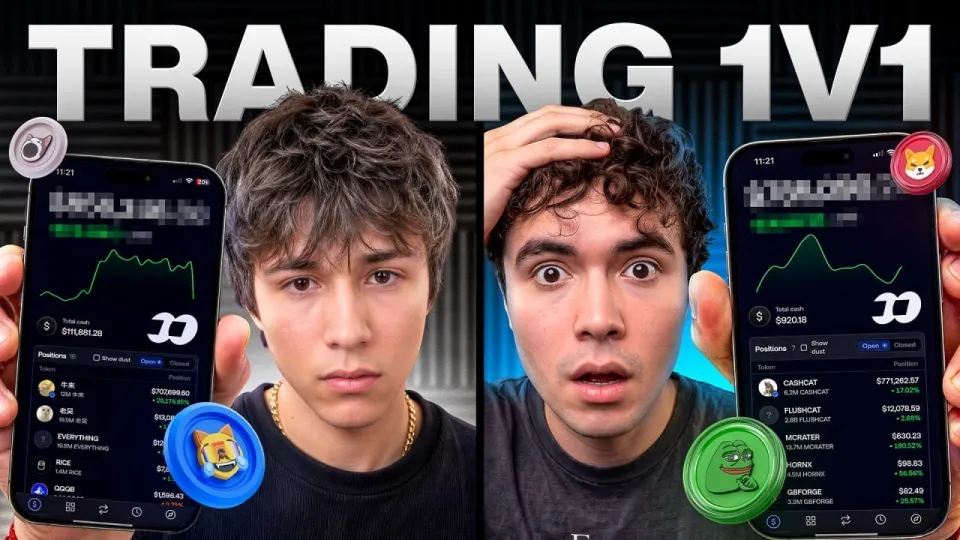
The challenge format is simple: two traders, one screen, real money, and a running commentary on every decision. The host of insentos takes on a guest presented as an experienced meme coin trader, and the value of the format is that it exposes process rather than results. You see how each trader picks a token, how long they wait before entering, and — most importantly — when they decide to cut a position.
What stands out is that the guest keeps explaining his reasoning while actively trading, which is unusual in live content. Viewers noticed it too: several comments point out that he stayed informative under pressure and kept asking the host about his thought process. For anyone learning, that dialogue is the actual product — the profit-and-loss number at the end is mostly noise.
Why meme coins behave nothing like normal crypto assets
Meme coins on Solana and Ethereum have no earnings, no treasury and no product; their price is a coordination game played by wallets that can enter and exit in seconds. That produces three structural traits every trader has to plan around:
- Liquidity is thin and can vanish. A pool can hold a few thousand dollars one minute and be drained by a single large seller the next. Slippage on the way out is often worse than on the way in.
- Supply concentration decides everything. If a handful of wallets hold most of the float, they can end the run whenever they choose. Checking holder distribution before buying is not optional.
- Attention decays fast. A token's narrative has a lifespan measured in hours or days. A chart that looks like a breakout is frequently just the last buyers arriving before volume dries up.
Because of this, meme coin trading is closer to scalping a news event than to investing. The people who survive do not hold through drawdowns hoping for a recovery — they define a maximum loss per trade before they click buy.
The toolkit: Axiom, FOMO and execution speed
The video's description points to two tools: Axiom, a trading terminal built for fast on-chain execution, and the FOMO community platform. Axiom is the kind of interface that bundles token discovery, charting, wallet tracking and one-click swaps in a single screen — the reason traders use it is latency, since on meme coins a few seconds of delay changes your entry price materially.
A practical beginner workflow looks like this:
- Create a dedicated wallet with only the capital you are willing to lose entirely.
- Fund it with a small amount of SOL or ETH, keeping gas and priority fees in mind.
- Screen candidates by liquidity, holder count and distribution before looking at the chart.
- Set a hard stop and a first profit target before entering, then execute the exit without renegotiating.
The community side matters as much as the terminal. Groups like the one behind the referral link exist to share calls, but a call is not analysis — treat every shared ticker as a lead to verify, never as an instruction.
Reading the audience: what beginners keep getting wrong
The comment section under the challenge is a decent map of where new traders get stuck. The most common requests are for a smaller-bankroll challenge — something like turning a tiny starting balance into a larger one — and for more step-by-step videos showing the strategy in real time rather than after the fact.
The sharpest observation from viewers is that live sessions of this type frequently end in a loss, which makes the whole exercise look like gambling. That criticism is fair and worth sitting with: if your edge depends on being early to a narrative that thousands of people are also chasing, your results will be dominated by variance. A few other recurring themes are worth naming:
- Access frustration. People say communities are advertised everywhere but hard to actually join; the barrier is usually a paid tier or an invite.
- The influencer advantage. Trading from a large account moves price and attention in ways a retail wallet cannot replicate, so copying the trades of a visible trader rarely transfers.
- Information overload. New traders want more content, but the bottleneck is usually repetition of one simple process, not more strategies.
The useful takeaway from the audience reaction is that a challenge format is genuinely instructive when it shows the reasoning behind a losing trade as clearly as a winning one.
Risk rules that separate a trader from a gambler
Position sizing is the single control that decides whether a bad streak ends your account or just dents it. A workable framework for meme coins:
- Risk no more than 1–2% of your total trading capital on any single token, and assume the position can go to zero.
- Take partial profit on the first strong move instead of waiting for a round number; meme coin charts rarely reward patience.
- Never average down into a token whose volume is falling — that is the signature of an exit, not a dip.
- Keep a written log of entry thesis, exit and result; the pattern in twenty trades tells you more than any single win.
- Stop trading for the day after two consecutive full losses; tilt is the most expensive emotion in this market.
None of this makes meme coin trading safe. It makes the downside finite, which is the only realistic goal when the asset class itself is designed to be volatile.
Useful links
- FOMO — community registration and referral
- Axiom trading terminal
- insentos on X
- insentos on Instagram
- insentos on TikTok
Final takeaway
A live challenge between an experienced trader and a host learning in public is more useful than another highlight reel, because it shows the decisions, the hesitation and the losses. The insentos format works precisely because the guest keeps explaining his process while the money is at stake, which is the part most tutorials skip. If you take one thing from it, take the emphasis on exit discipline and small fixed risk per trade — that is what keeps a meme coin habit from becoming a gambling habit. If you want to follow the same setup, start with the FOMO registration link and treat every trade as tuition.
Questions & answers
Is meme coin trading actually profitable for beginners?
For most beginners it is not. Meme coins have no cash flow, thin liquidity and extremely fast attention cycles, so results are dominated by variance and by how early you are. Profitability comes from strict position sizing and fast exits rather than from picking the right token, and a large share of new traders lose their entire stake within the first few months.
How much money do I need to start trading meme coins?
You can start with a very small amount, but the practical constraint is fees and slippage rather than the minimum buy. A dedicated wallet funded with only what you can afford to lose completely is the right starting point, and many viewers of live challenges ask for small-bankroll formats precisely because large balances distort the strategy.
Why do live trading challenges so often end in a loss?
Because the format rewards action: the trader has to do something on camera, which pushes toward more trades than the setup justifies. Meme coin outcomes are heavily variance-driven, so a single session says little about skill. Watching how a loss is cut is more instructive than watching a win.
Can I just copy the trades of a well-known trader?
Rarely with the same results. A trader with a large following moves attention and price when they post, and their entries are often filled before anyone else can react. Copying a ticker without understanding the liquidity, holder distribution and exit plan means taking the risk without the process.
Source: I Challenged A Pro Memecoin Trader (Who Won?) · Markdown version